Your Feed Is a Confession: What the Aesthetics You Crave Are Quietly Telling You
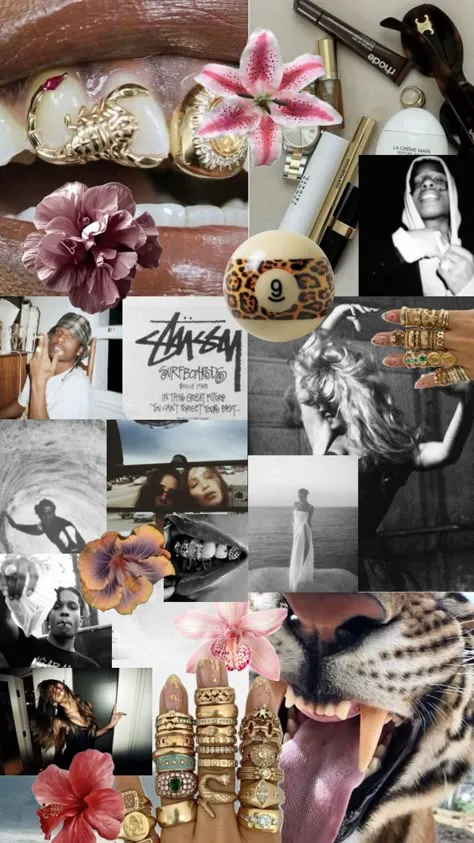
Photo: aesthetic mood board collage Pinterest saved images creative woman, via i.pinimg.com
Start paying attention to what you save.
Not just what you like in a reflexive, double-tap way — but what you actually stop for. What you screenshot and never tell anyone about. The color palette that keeps appearing in your saved folder. The specific quality of light in every interior photo you've bookmarked. The fashion references you return to. The visual mood that you can't articulate but would recognize immediately.
That pattern isn't aesthetic preference. It's autobiography.
We've gotten very comfortable talking about curation as a creative act — building a mood board, curating a feed, developing a visual identity. But we're less comfortable talking about what that curation reveals about the parts of ourselves we haven't consciously processed yet. The aesthetics we're drawn to aren't just telling the world who we want to be. They're telling us who we already are, underneath all the noise.
The Visual Mood as Emotional Language
Humans have always used the visual world to externalize internal states. The colors you surround yourself with, the spaces you feel most yourself in, the imagery that makes something shift in your chest — these aren't arbitrary. There's a rich body of psychology behind color, space, and emotional regulation, but you don't need to read a research paper to notice it in your own life.
Think about the last time your aesthetic preferences shifted significantly. A breakup that suddenly made you crave clean lines and spare palettes after years of maximalism. A period of creative stagnation that pulled you toward darker, more textured imagery. A new relationship that made everything feel warmer, literally — more golden light, more softness, more organic shapes.
Your visual instincts track your emotional reality with surprising precision. The mood board you're building right now is, in some sense, a real-time report on your inner weather.
What Specific Aesthetics Might Actually Be Saying
This isn't about rigid interpretation — visual meaning is personal and context-dependent. But there are patterns worth noticing.
An obsession with cottagecore, dark academia, or similar aesthetics that emphasize slowness, handcraft, and pre-digital textures often surfaces during periods of overwhelm or disconnection. There's a hunger there — not necessarily for a literal farmhouse, but for a pace of life that feels manageable. For tactile evidence that things were made by hands and time.
A sustained pull toward brutalism, industrial imagery, or stark monochrome can sometimes signal a desire for clarity — a stripping away of complication. When everything in your life feels layered and ambiguous, there's relief in an image that commits fully to its own structure.
The person who keeps saving images of expansive, open landscapes — deserts, wide skies, empty roads — is often processing something about constraint. The feed tells the story the mouth hasn't found words for yet.
Again, these aren't rules. They're invitations to look more honestly at what you're reaching for.
The Algorithm Didn't Choose This — You Did
It's tempting to attribute your aesthetic obsessions to algorithmic reinforcement loops. And yes, the way recommendation engines work, once you engage with a visual style it will feed you more of it. But the algorithm didn't choose the first image. You did. Something in you recognized something in that image and stopped.
The algorithm amplifies. It doesn't originate.
Which means the aesthetic universe your feed has become is, at its root, something you built — maybe not consciously, maybe not intentionally, but genuinely. Every saved post, every pinned image, every reference folder on your phone is a decision your nervous system made before your rational mind caught up.
That's worth taking seriously. Not as a source of anxiety, but as data. Your visual instincts are faster and often more honest than your conscious self-narrative.
When Your Aesthetic Becomes a Holding Pattern
Here's where it gets interesting and a little uncomfortable: sometimes the aesthetics we crave are less about where we're going and more about where we're stuck.
If you've been consuming the same visual mood for years — same color palette, same compositional style, same emotional register — it's worth asking whether you're genuinely drawn to it or whether it's become a comfort loop. A visual language you return to because it's familiar, because it matches a version of yourself you've outgrown but haven't released.
This isn't a criticism. Comfort is legitimate. But there's a difference between an aesthetic that expresses who you are right now and one that holds the shape of who you used to be. Sometimes we redecorate our feeds with the same furniture because change is harder than curation.
Noticing the difference is the work.
Letting Your Visual Instincts Lead
There's another side to this, though — one that's less about analysis and more about permission. Your aesthetic instincts are often smarter than your plans.
The person who keeps gravitating toward bold color and loud pattern even while living in a very neutral, buttoned-up life is telling themselves something. The one whose feed has quietly shifted from aspirational career content to images of travel, craft, and open time is probably processing a want they haven't admitted to yet.
Visual culture becomes a subconscious autobiography because it operates below the threshold of self-censorship. You don't talk yourself out of saving an image the way you might talk yourself out of a feeling. The image just lands, and you keep it, and over time the collection builds into something that says more about your interior life than most conversations ever will.
So look at what you're saving. Not to decode it perfectly, not to turn it into a self-improvement project. Just look.
Your feed already knows things about you. It's been waiting for you to catch up.