Watching It All Burn Down (From a Safe Distance): The Real Reason You Love Other People's Chaos
Let's be honest with each other for a second.
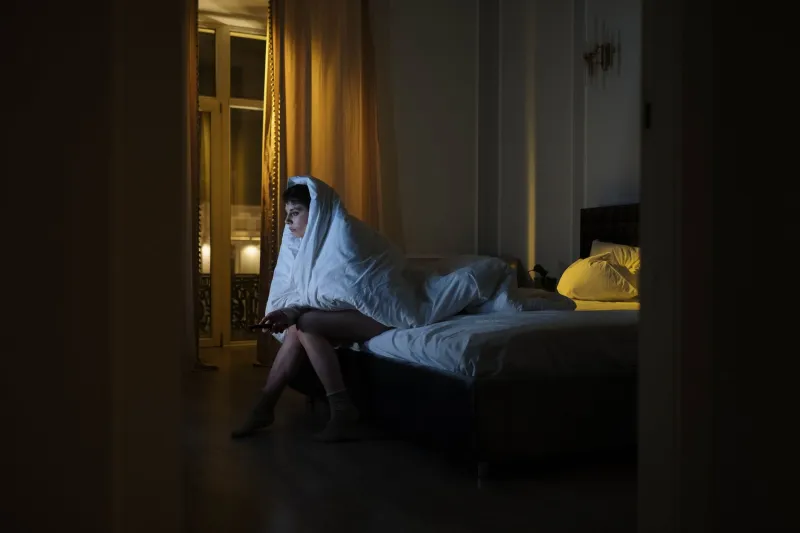
You have, at some point — maybe last Tuesday, maybe right now — settled into your couch with a snack and watched another human being's life completely unravel on your screen. A marriage detonating in real time on a reality show. A documentary about a con artist who somehow convinced an entire zip code he was a visionary. A dramatic series where someone loses everything they built over a decade in the span of forty-five minutes. And somewhere in the middle of all that wreckage, you felt something uncomfortably close to relief.
Not because you're a bad person. Stay with me here.
The Name Nobody Wants to Own
The Germans gave us the word schadenfreude — pleasure derived from another's misfortune — and we've been collectively pretending we don't know what it means ever since. It's one of those concepts that feels too unflattering to claim, like admitting you Googled your ex at 11 p.m. or that you actually enjoyed a little drama in a friend group that didn't directly involve you.
But the entertainment industry has been banking on this impulse for decades. Reality television didn't accidentally become a multi-billion dollar genre. The Real Housewives franchise, Love Is Blind, Intervention, Hoarders, The Ultimatum — these shows exist because we watch them. Millions of us, consistently, with loyalty that rivals prestige drama. The question worth sitting with isn't whether we're drawn to other people's disasters. It's why — and what that actually says about us.
The Comparison Machine in Your Head
Here's one uncomfortable truth: watching someone else's chaos is, in part, a calibration exercise. Our brains are relentless comparison engines. We're constantly, often unconsciously, measuring our own lives against some invisible benchmark — and that benchmark shifts based on what we're consuming.
When you watch someone blow up their marriage over a text message, or a startup founder fabricate an entire company and implode spectacularly (cough — there's a documentary for every flavor of this), something in your nervous system quietly recalibrates. Your own mess starts to look more manageable. Your overdue credit card bill, your difficult conversation you've been avoiding, your mediocre week — all of it gets a little smaller against the backdrop of someone else's Category 5.
This isn't cruelty. It's perspective. Uncomfortable, borrowed perspective — but perspective nonetheless.
Witnessing as a Form of Survival
There's another layer here that doesn't get talked about enough: the act of witnessing collapse, from safety, is actually something humans have always done. Before Netflix, there were cautionary tales. Before cautionary tales, there were public spectacles, myths, tragedies performed in amphitheaters. Aristotle called it catharsis — the emotional purging that happens when you experience intense feelings through art rather than direct experience.
Watching someone else fall apart gives us a controlled environment to process fear. Fear of failure. Fear of humiliation. Fear that the things we're holding together might not hold. When a character — real or fictional — hits the floor and the credits roll, we get to close the laptop and still be okay. We survived it with them, at a distance. And there's something quietly profound about that.
The best disaster content doesn't just entertain. It rehearses. It lets you feel the weight of collapse without being crushed by it.
When It Stops Being Comfort and Starts Being Armor
Not all disaster-watching is created equal, though. There's a version of this that's genuinely healthy — the kind that makes you feel more human, more connected, more aware of how fragile and resilient people can be simultaneously. You finish the documentary and you feel something. Empathy. Gratitude. A weird, renewed appreciation for your boring Tuesday.
And then there's the other version. The one where you're not watching to feel — you're watching to not feel. Where the parade of other people's catastrophes becomes a way to avoid sitting with your own. Where the chaos on screen is easier to process than the quieter, thornier chaos in your own apartment.
The difference matters. One is escapism that refuels you. The other is escapism that just delays the bill.
The Empathy Underneath the Guilt
Here's the part that gets overlooked in every think-piece about guilty pleasure TV: a lot of disaster-watching is actually empathy in disguise. When you're riveted by someone's breakdown, you're not always watching from a cold, superior distance. Sometimes you're watching because you recognize something. Because you've been close to that edge. Because you know what it looks like when someone is holding on by a thread and performing fine.
The best moments in reality television — the ones that make you put your phone down — aren't the explosions. They're the quiet seconds right before. The look on someone's face when they realize everything is about to change. That's not schadenfreude. That's recognition.
Maybe the reason we're so obsessed with other people's disasters isn't because we enjoy the suffering. Maybe it's because chaos is one of the few places where people stop performing. Where the mask drops. Where something real finally shows up on screen — and we've been so starved for real that we'll watch it burn just to feel less alone.
So Keep Watching. But Know Why.
You don't need to feel bad about your Hoarders marathon or your third rewatch of a particular infamous documentary about a music festival that never happened. You don't need to justify why you know every detail of a stranger's very public unraveling.
But it's worth pausing, occasionally, to ask what you're getting out of it. Comfort? Perspective? Company in the dark? Those are legitimate things to need. The storm on someone else's screen can be a strange, flickering kind of light — just make sure you're using it to see by, not just to avoid looking at your own walls.